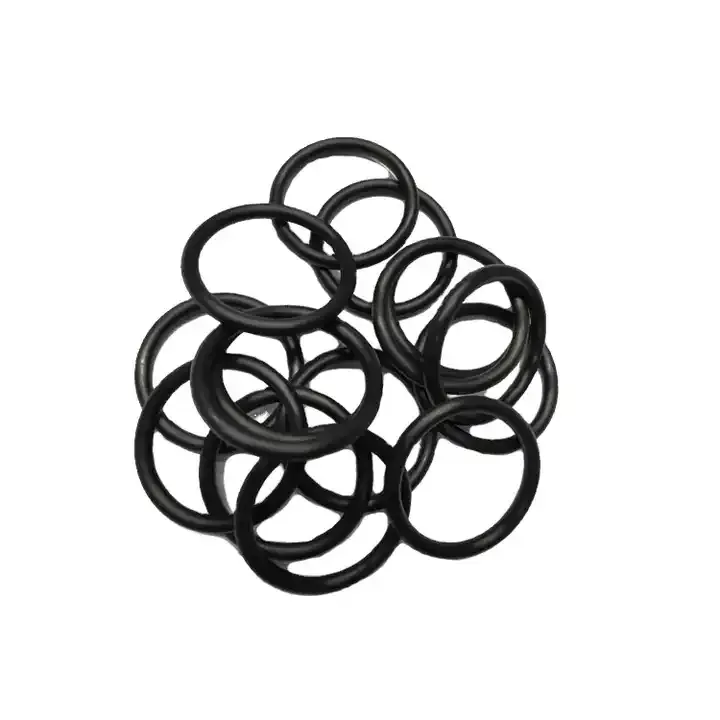
Introduction To SILICONE
We are an OEM & ODM manufacturer in China,and we have full experience with excellent R&D team in custom molded rubber & silicone parts, seals, buttons, stopper, gifts, etc. We can provide to our customers in-house tooling, samples within 7 days, 100% inspection, PPAP and small MOQ.
Introduction To SILICONE
SILICONE Material Description
Introduction
Silicones are a group of synthetic polymers in which silicon atoms are linked to oxygen atoms.
They are characterized by excellent mechanical properties and a good temperature resistance.
As they are not harmful to health, they are commonly used in the food industry.
Steinbach AG produces, for example, low-wear seals and membranes made of silicone according to DIN standards.
Silicone plastic is made of silicone resin as the basic component, and mica powder, asbestos, glass fiber or glass cloth and other fillers, fine compression molding or lamination.
They have high heat resistance, excellent electrical insulation and arc resistance, as well as waterproof, moisture-proof and other properties.
| Density / specific gravity | 1.75-1.95 g/cm³ |
| Hardness | 15 Shore A |
| Tensile strength | 0.379 MPa |
| Elongation | 400% |
| Tear strength | 15.4 kN/m |
| Service Temperature | -54 to 232°C |
Main performance
High temperature performance. Although the strength of silicone rubber at room temperature is only half of that of natural rubber or some synthetic rubber, in a high temperature environment above 200 °C, silicone rubber can still maintain certain flexibility, resilience and surface hardness, and there is no obvious change in mechanical properties.
The glass transition temperature of low-temperature performance silicone rubber is generally -70~-50 °C, and the special formula can reach -100 °C, indicating that its low temperature performance is excellent. This is of great significance to the aviation and aerospace industry.
Weather-resistant silicone rubber Si-O-Si bonds are very stable to oxygen, ozone and ultraviolet rays, and have excellent weather resistance without any additives.
Electrical performance. Silicone rubber has excellent insulation properties, corona resistance and arc resistance are also very good.
Physical and mechanical properties. The physical and mechanical properties of silicone rubber at room temperature are worse than that of general rubber, but its physical and mechanical properties are better than that of general rubber at a high temperature of 150 °C and a low temperature of -50 °C.
Oil resistance and chemical reagent resistance. Ordinary silicone rubber has medium oil and solvent resistance.
Gas permeability. At room temperature, silicone rubber is 30-50 times more permeable to air, nitrogen, oxygen, carbon dioxide and other gases than natural rubber.
Physiological inertness. Silicone rubber is non-toxic, tasteless, odorless, non-adhesion to human tissues, has anticoagulant effect, and has very little reactivity to body tissues. Particularly suitable as a medical material.